← Home About Subscribe Archive Photos Also on Micro.blog
  • I wouldn’t have expected to be as against technology for the little kids as I ended up being. But if I don’t introduce the iPad in a whole day, he never thinks about it. He ends up playing with the hose, or engineering a little boat out of wine corks.

    When the iPad’s introduced to do 30 minutes of an educational thing, there’s a whole hangover period where he doesn’t wanna go outside, and he’s debating it and asking for the iPad back.

    Life in The Third Oikos: Interview With Jesse Genet

    → 11:28 AM, May 26
  • We need a return to confessional Christianity. We need a return to stricter subscription by clergy to the confessions of their churches. We must trust again that these confessions are understandable; that they contain not only the truth but possess the clarity to bind pastors and thus to direct their teachings and their practices.

    Doing so would result in much good, for confessions help to guard Christ’s flock against doctrinal error. We of course should protect congregants from physical and psychological abuse with great vigilance. But clergy can do great harm through false teaching as well. To believe the gospel we must know the truth about it. Confessions can provide needed clarity in holding clergy accountable for when they distort Scripture.

    A Key To Spiritual Renewal, by Adam Carrington

    → 6:21 PM, Feb 27
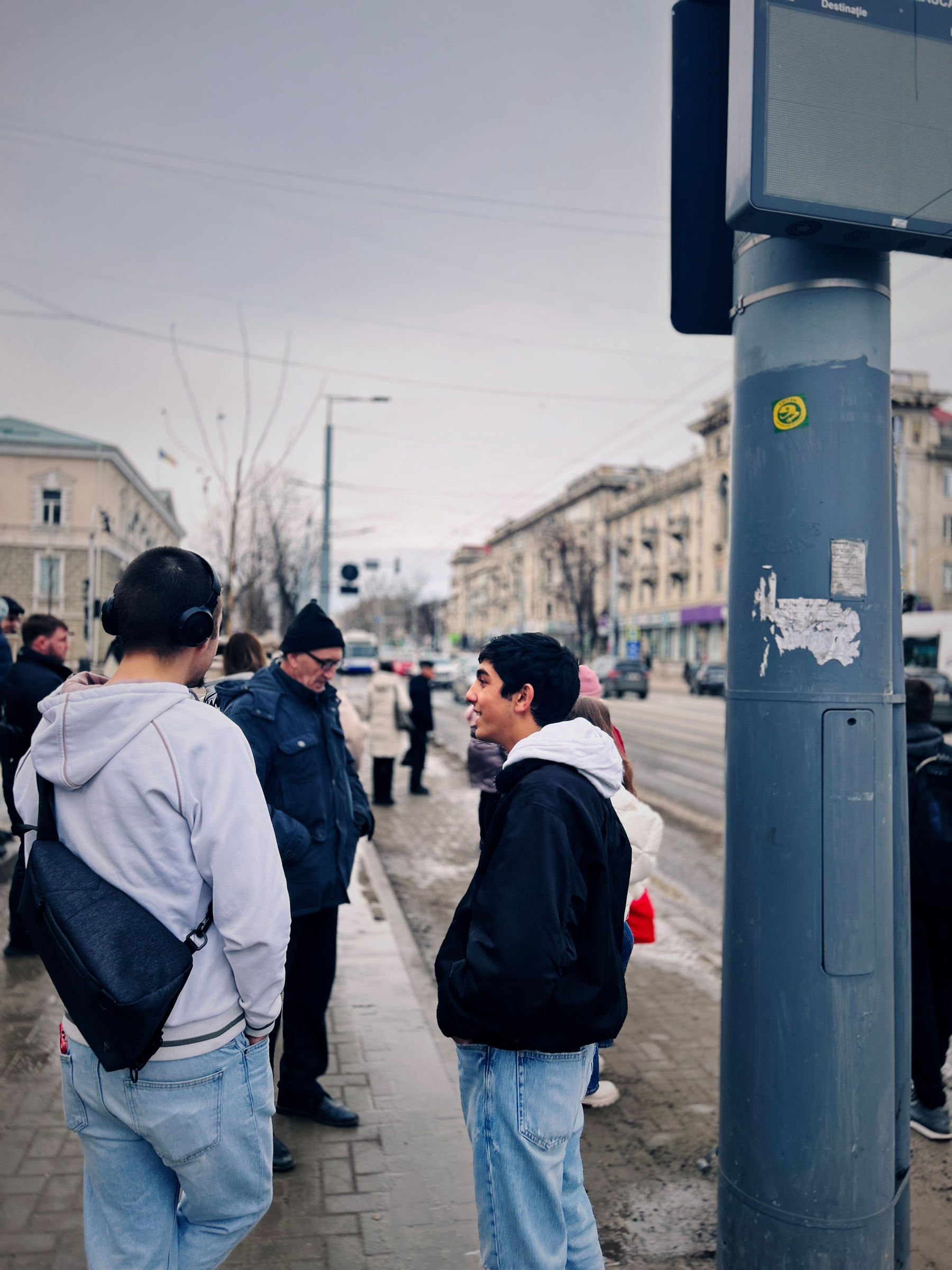
  • Chișinău, Bus Station at Armeneasca St.

    → 5:16 PM, Feb 23
  • The cafés of San Francisco are full of highly paid tech workers clattering away on their keyboards; if you peer at their screens to get a closer look, you’ll generally find them copying and pasting material from a ChatGPT window.

    An AI might be able to code faster than you, but there is one advantage that humans still have. It’s called agency, or being highly agentic. The highly agentic are people who just do things. They don’t timidly wait for permission or consensus; they drive like bulldozers through whatever’s in their way. When they see something that could be changed in the world, they don’t write a lengthy critique—they change it. AIs are not capable of accessing whatever unpleasant childhood experience it is that gives you this hunger. Agency is now the most valuable commodity in Silicon Valley.

    Sam Kriss

    → 3:39 PM, Feb 21
  • As for why the Turing test is silly: It is designed to do nothing more than distinguish those things which seem to a human interlocutor to be human communication, personhood. It cannot distinguish actual intelligence — whatever that turns out to be, if anything — from clever simulation. It asks not “is this communicator intelligent?” but “what outputs would lead us to judge that it is intelligent?”

    It’s very similar to the proposal he made to Eve: that she should get the good thing, the thing which she knew God intended for her, that is, knowledge of good and evil, mature levels of power and knowledge, by using a technique: the Fruit, which she could eat and bypass all the becoming mature business. Because she was meant to become mature: to grow, non-mechanically, wise enough to fulfill her role as God’s vicegerent in the world, beside Adam, filling it with life and being Lady Wisdom for the Earth and for her children.

    Susannah Black against AI

    → 10:31 AM, Feb 20
  • Designed for addiction

    The child deletes the app, only to reinstall it days later after being beset with FOMO. She will feel bad about herself for what she perceives as a failure, unaware that whole teams at each platform are dedicated to increasing the amount of time that users like her spend on the platform. Nor will she understand just how good they are at their jobs.

    For a long time, the platforms have gotten away with this on free speech grounds. What, you’re going to tell us we can’t rank posts in a feed? What, you’re going to tell someone how many posts they can view? “Social media addiction” is a media invention, they’ll say. There’s no proven causal link between using apps like these and mental health harms. And in any case, Section 230 of the Communications Decency Act prevents them from being held liable for what other users post on their platforms. Don’t like that video celebrating eating disorders? Take it up with the person who posted it.

    And all of this mostly worked, because good democracies protect free expression. But by the mid-2020s, almost everyone knew both adults and children who struggled to regulate their usage of social apps and suffered as a result. The problem was almost never an individual act of speech on the platform. Rather, it was the way the products are designed.

    Why the infinite-scroll childhood may be coming to an end

    → 3:03 PM, Feb 10
  • On 15-minute cities

    It is extremely difficult to find an urban locality in Western or Central Europe where life’s daily necessities cannot be reached within 15 minutes on foot or by bicycle. But whilst the 15-minute cities concept was theoretically focused on urban areas, it was put together by — and seemed to be especially popular among — people who liked to talk about how they already lived in that way. By extension, they implied that everybody else ought to be able to live like that too. As in America, what was branded as an idea to build better cities was in reality a discursive tactic to problematise suburban living.

    What we end up with is a classic case of motte-and-bailey argument, in which we are asked; “surely you want to have the amenities of life available within 15 minutes?”; “yes” we reply “but how are we going to make that happen”. We are then left to fill in the glaring blank space in the idea ourselves, and we reason that these amenities will only pop up when our current way of doing things; i.e. driving to a big supermarket, is closed off to us. When we point this out, the 15-minute cities people call us conspiracy theorists, and ask why we are so afraid of a few bike lanes and traffic filters.

    15-minute cities is not a policy; it is a pose. It is a means by which the Zone 1-2 dwelling, bicycle-riding urbanist can signal superiority to the Alan Partridges driving their Rover 800 Vitesse into Norwich City Centre, and by which the Oxfordshire Lib Dem can tease his right-wing associates for being unlettered conspiracy theorists. 15-minute cities is just another iteration in the tedious politics of status-signalling.

    “15-minute cities” is not a policy

    → 12:00 PM, Feb 5
  • Sustainability isn’t something evangelicals do well. A movement based on—if David Bebbington is to be believed—conversionism, activism, a specific soteriology, and biblicist hermeneutics is not really prepared to create institutions, much less sustainable ones. Even the more highbrow evangelical or evangelical-adjacent communions—the ACNA, the PCA, and OPC—are ecclesiastically and intellectually led almost entirely by converts. Multi-generational anything is rare in 2025; multi-generational churchmanship outside of Catholic, Eastern, or Lutheran churches is nigh unheard of. Evangelicals, it seems, can’t sustain anything. How then could they be expected to sustain Christian politics? Why this matters especially today is evangelicals are interested in destroying the forest of secularism, they have reason to think that they can, and yet they still have not learned how to build for generations or to make decisions today in view of what is prudentially possible and sustainable long-term.

    You Can’t Clear Cut Political Society

    → 12:20 AM, Jan 26
  • RSS
  • JSON Feed
  • Micro.blog